
AéroSim

Design, validate and optimise your air-handling solutions

Aéro Textile Concept draws on its design office and its expertise in airflow analysis to design and validate the most effective technical solutions based on the expected outcomes. Each project is subject to a specific study to ensure a solution that is perfectly tailored to the building’s constraints, comfort objectives and the desired energy performance. However, some projects require an in-depth simulation of airflows.

Using AéroSim®, we carry out a detailed analysis of air flow patterns in your environment in order to design high-performance, reliable and optimised air distribution systems.

A guarantee of performance thanks to expertise and numerical simulation

At Aéro Textile Concept, CFD simulation, combined with the expertise of our design office, enables us to predict, validate and optimise airflow patterns prior to implementation.

All our textile ducts and diffusers come with a guarantee of airflow performance. AéroSim enables us to simulate the expected performance and provides a comprehensive airflow performance guarantee.

Numerical simulation for optimising airflow performance

Numerical simulation makes it possible to predict the actual behaviour of a system before it is put into operation. It is a valuable decision-making tool for ensuring the soundness of technical choices and optimising the project’s performance.

Verification of airflow and thermal criteria

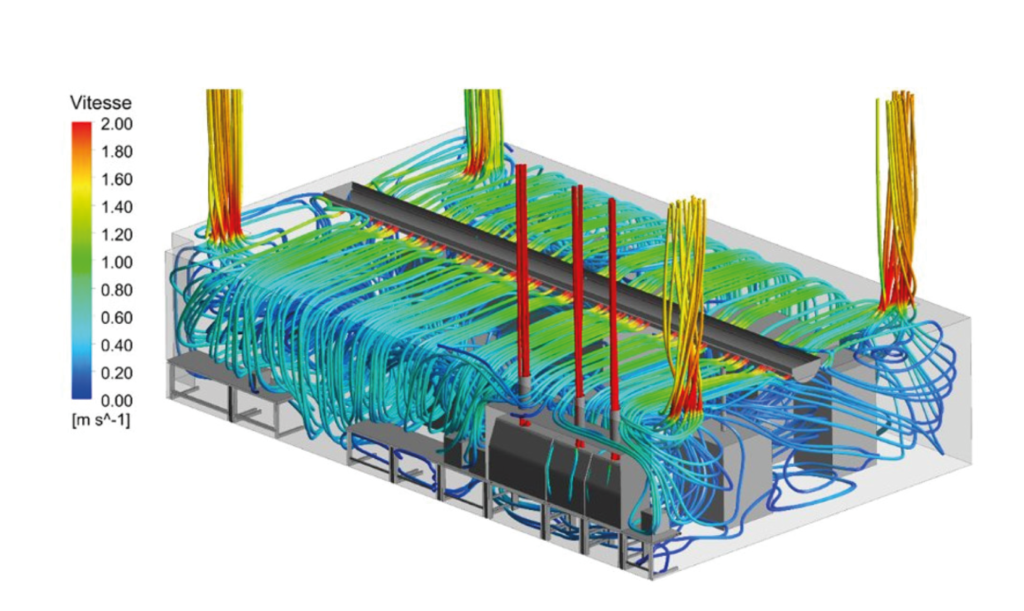
Visualisation of airflows.

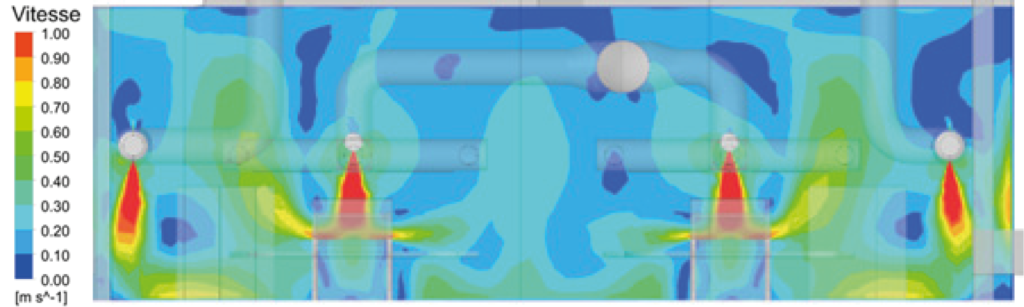
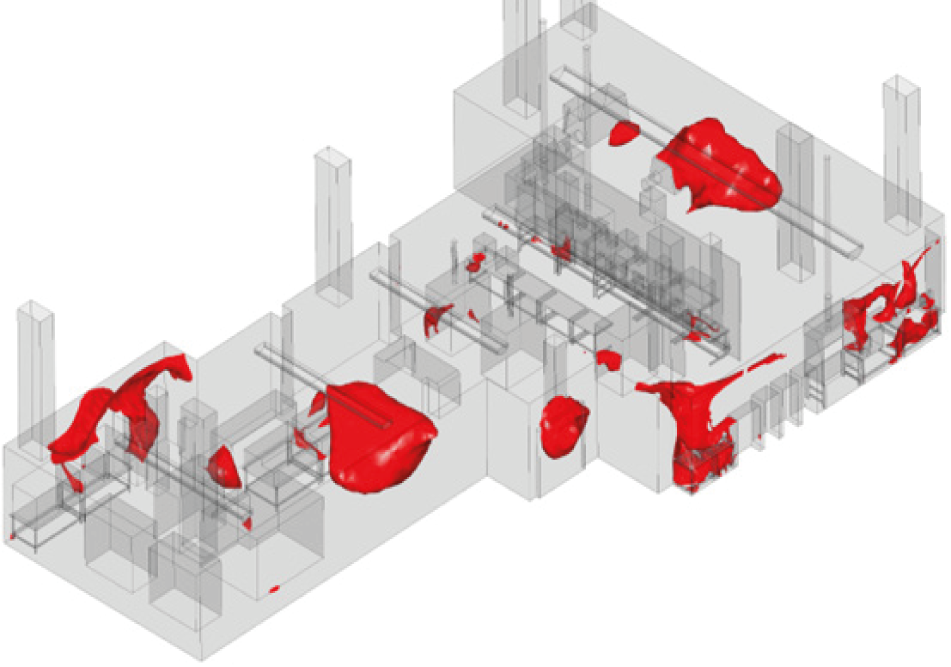
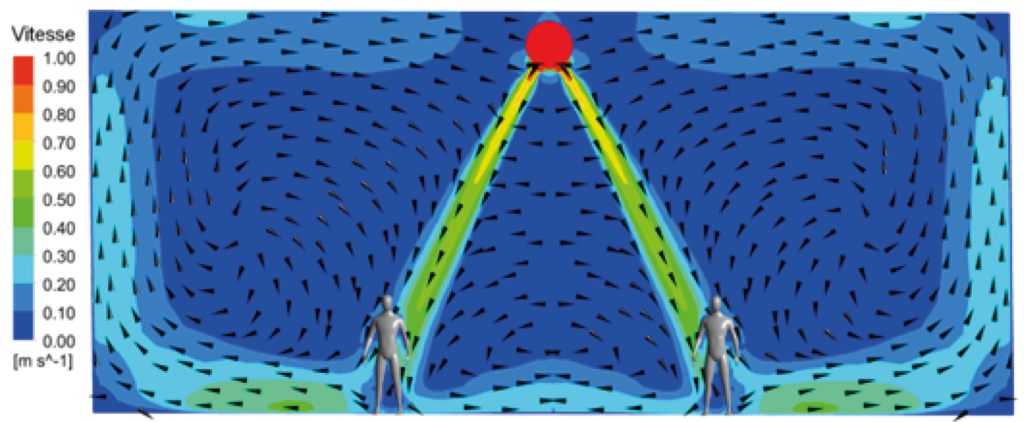
Simulation enables the visualisation and analysis of phenomena that directly influence the quality of air treatment (analysis of residual air velocities, identification of stagnant zones, detection of obstacles, identification of thermal stratification curves, analysis of turbulence zones).

Assessment of comfort and air quality.

Modelling also makes it possible to assess the impact of the systems on occupants and processes. (Analysis of thermal imbalances, Study of humidity variations, Assessment of pollutant concentrations, Verification of draughts, Identification of dead zones).

Optimisation of design and energy efficiency

Numerical simulation enables each parameter of the air-handling system to be optimised before it is built. These parameters range from the positioning of supply and return ducts, the selection of the most suitable air distribution technology, and the comparison of different technical solutions, to the optimisation of energy performance and the improvement of the system’s overall efficiency.

Advice and technical support

AéroSim supports project owners, engineering consultancies and installers in their decision-making (assessment of existing installations, identification of technical improvements, comparison of ventilation scenarios, optimisation of resources and operating costs, and validation of design choices).

Numerical simulation formulas

Feasibility study

(Specific simulation)

An initial analysis to assess the technical feasibility of a scenario at the preliminary design stage.

Services included:

  • Complete modelling of the room
  • Visualisation of air flows
  • Calculation of velocity fields

This study enables the design principles to be validated and any technical constraints to be identified right from the early stages of the project.

(Numerical simulation)

A detailed study designed to evaluate the performance of a ventilation scenario during the operational phase.

Services included:

  • Complete modelling of the room
  • Calculation of velocity fields
  • Temperature calculations
  • Analysis of humidity
  • Incorporation of the heat balance
  • Advanced visualisation of air flows

This approach enables the system’s performance to be measured accurately, ensures that comfort and air-handling objectives are met, and provides assurance regarding technical decisions through prior aerodynamic validation.

(Advanced numerical simulation)

A comprehensive approach to developing and validating a high-performance air distribution solution that meets the most stringent requirements.

Services included:

  • Development of air treatment solutions
  • Modélisation complète du local
  • Incorporation of the heat balance
  • Calculation of velocity fields, temperatures and humidity
  • Advanced flow visualisation
  • Optimisation of airflow and energy performance

This study enables the design of a bespoke solution that guarantees aerodynamic performance, whilst ensuring efficient air treatment, occupant comfort and control of energy consumption.

Example of use

Checking residual air velocity in occupied areas of buildings

Temperature control in sensitive areas

Monitoring relative humidity to ensure a comfortable environment

Identifying areas of air stagnation

Design of zoning systems

Assessment of areas of high pollutant concentration or filtration efficiency

Air flow in a laboratory room

Do you have a project under consideration? Contact our design office